The Broomway
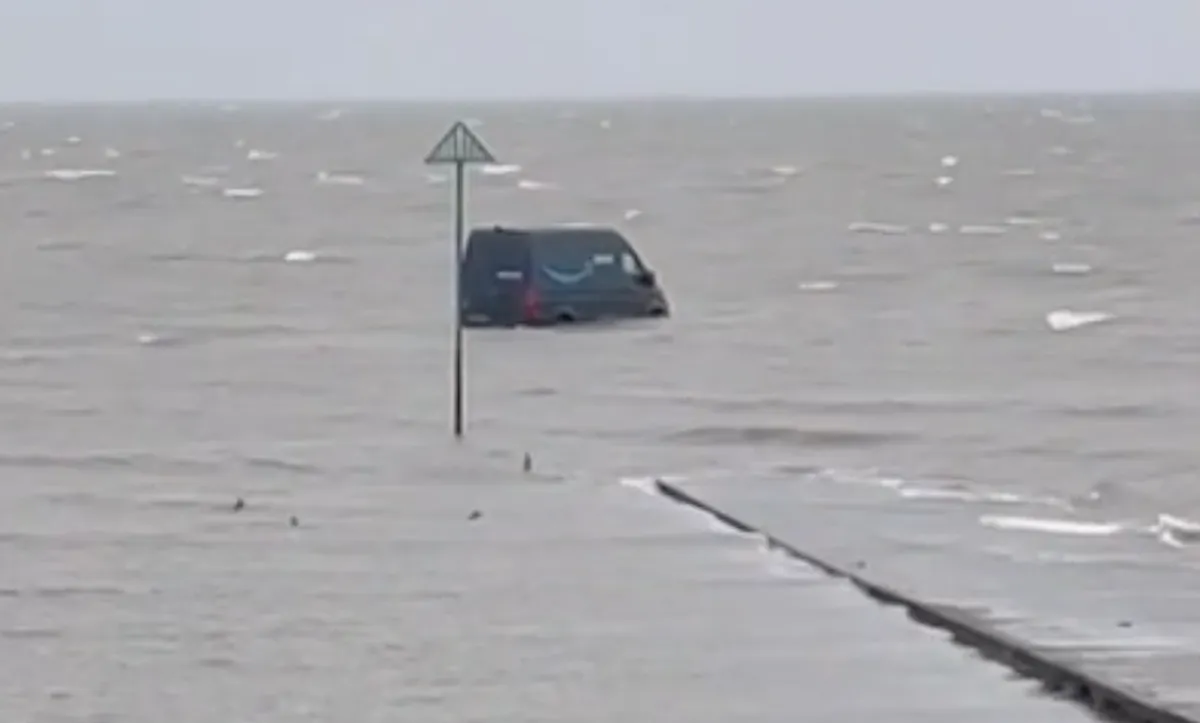
An Amazon driver makes an ancient mistake off the coast of south east England. CNN:
An Amazon delivery van had to be recovered after its driver followed a GPS route onto “extremely dangerous” mudflats.
English coastguards received a call on Sunday morning about the incident the previous evening, according to a Facebook post by HM Coastguard Southend.
They said the van had driven onto The Broomway, a six-mile path dating back 600 years that is not intended for vehicles.
The driver had been “following a GPS route” trying to reach Foulness Island, off the east coast of the county of Essex, according to the coastguard Facebook post.
Let's just say the driver, who got back to shore safely, was not the first to be bested by the hazardous track. The Broomway's origins are not clear -- it may have even been used by the Romans, in some form -- but it's death toll is notorious. For some time it was known as the road that took more lives than Mount Everest, though that's either outdated or was never actually true. More than 300 people are known to have perished on Everest; the Broomway has recorded about 100 deaths.
The road joins mainland Britain to Foulness Island, now home to a military base. How did the road get its name? From the Southend Echo, in 2006:
Local people knew these rules and respected them, but even they risked a third, wild-card danger. This was the sea-mist, which could, seemingly from nowhere, suddenly swirl across the path, blanking out all vision.
To guide travellers, local people resorted to a unique device. On either side of the Broomway, at 30 yard intervals, they drove stakes. To these stakes they tied bundles of twigs, giving the appearance of a witch's broom, or besom.
Unfortunately for the van driver, the brooms are long gone, washed away with history. Visitors to the island are advised to use the more modern route just north of where the driver lost his way. Amazon is said to have arranged a local farmer to help retrieve the vehicle.